Author Archives: Craig Bailey

Which Curve Am I On?

As far as our lives are concerned, we are either making progress or falling behind. There is no standing still; no treading water. It is important to ask ourselves: “Which curve am I on?”

Another question: Do you know of anyone who disdainfully goes to their job on a daily basis because they “have to”; seemingly trapped in a rut until retirement or the day they die (whichever comes first)? This is a reality for many. Too many.

The mass of men lead lives of quiet desperation.” ~ Henry David Thoreau

There is a better way! And, many have taken that way.

Obviously, it is necessary to earn a living to pay for the important things in life. But, our work need not be drudgery. If we feel our work is drudgery we have choices. We can change our attitude (the way we think about our work), change our employer or both! If we don’t choose one of these options then just maybe we are one of those individuals who are not happy unless we are unhappy. Or, we have succumbed to inertia (a tendency to do nothing or to remain unchanged).

The world owes us NOTHING! If we want something we have to work (go above and beyond) for it!

To make progress (towards changing our attitude and/or our employment) we can do so by simply investing our extra time in learning and personal growth. We all have more time than we care to admit. Just tally the number of hours the one-eyed monster brightens our living room each week. Ouch, I know…

The first step in making progress is deciding:

  • What do I REALLY, REALLY, REALLY want to be doing (for a living, recreation, travel, with my family)?
  • Where do I want to be in 3-5 years (position, title, self-employment, geographic location, income level)?
  • What will I need to do to get there (education, training, engage a mentor, investor(s), bust my hump for sure)?

The reality is that we can do, be, have virtually ANYTHING we set our minds to; and then act on — UNTIL. Until we have achieved the object of our desire.

Whether you think you can, or think you can’t – you’re right.” ~ Henry Ford

This is all about goal setting. We simply need to write down our goals, review them each night before bed and upon rising each morning. Keep them in our face. Post pictures of what we are working towards. My family always knows “what’s next” for us by the pictures on our fridge 🙂

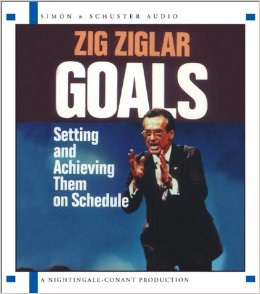
If you’d like more complete training on goal setting, check out the following program. I attended this seminar 20+ years ago. It was absolutely fantastic!
51CAZD5095L._SX258_BO1,204,203,200_

My son Ian recently sent me the following quote:

“The best way to make your dreams come true is to wake up.” ~ Paul Valery

How true!
The $25,000 Idea!

Want an idea that will significantly boost your productivity on and off the job, that a man was once paid $25,000 for? And, an approach that can help create balance in your life so you can enjoy dinner with your family “most” evenings?

What is amazing about this (true) story is the fact that it originates from the early 1900’s! So, in today’s terms this $25k idea is worth SO MUCH MORE! Yet, it is just as applicable now as it was back then.

As described in previous posts, we can make excellent use of our time by converting our vehicle into a University on Wheels. One of my favorite authors to listen to is Earl Nightingale, who presents this $25k idea in several of his programs.

In a nutshell, the $25k idea is this:

Write down the six most important things you have to do. Then number them in the order of their importance. And tomorrow morning, go to work on number one. Stay with it till it’s successfully completed, and then move on to number two, and so on. When you’ve finished with all six, get another piece of paper and repeat the process. You’ll be astonished and delighted at the order it brings into your life and at the rate of speed with which you’ll be able to accomplish the things that need doing in the order of their importance. This simple but tremendously effective method will take all the confusion out of your life. You’ll never find yourself running around in circles wondering what to do next. ~ Earl Nightingale

Quite a simple method that we ALL can apply and benefit from. Yes, “life happens” and things may not always be that simple. The original / complete text of this story provides additional details and nuances on this method. If you’d like to learn more feel free to click here (more free info!).

We all have experienced the feeling (called stress) that we have “way more to do” in a day than there is available time. I have found that when I spend a few moments at the beginning of each day applying the above method I am able to get the “most important” things done towards the accomplishment of my goals and objectives. And, I have time left over (most days) to spend precious time with family and friends.

Another relevant quote from a contemporary personal effectiveness coach is:

Every minute you spend in planning, saves 10 minutes in execution.” ~ Brian Tracy

That is a 10-fold return on our time!!!

If you feel you need to continue putting in an increasing number of hours every day, just to keep up, stop what you are doing RIGHT NOW and give this method a try. The alternative: burn-out.

Hope you find the $25k idea as effective for you as it has been for me!

Good Debt vs. Bad Debt?

Is there good vs. bad debt?

Opinions vary. Some will disagree with mine, which is: there is “reasonable” debt and there is bad debt, but there is no such thing as “good” debt. By default, debt means we are “paying” for the use of someone else’s money and we are (for all intents and purposes) their slave until we repay that debt.

Want a 100% guaranteed return? Avoid paying (interest) for the use of money.

In my twenties, during the preparation of a budget, someone older than I once counseled me by saying: “You’ll always have a car payment.” While I had no basis to dispute that guidance then, I can now say: “No, No, No.” We can “choose” to have a car payment, but having a car payment is NOT a “requirement.” In fact, by having a car loan we are artificially (and quite significantly) inflating the cost of the car!

Let’s start with bad debt. I’d consider this to be the continued use of credit cards when we aren’t paying off the balance EVERY SINGLE month, especially for expenditures we receive virtually no long term value from. In the case of my (single) credit card, we’d end up paying an extra 13.24% per year on any outstanding balance. Let’s take a simple example. We “think” we need a new 55″ flatscreen TV (I mean, everyone has one). But, we don’t have the cash on hand to pay for it. It is presently on sale at Best Buy for $699.99. We add this purchase to an existing credit card balance. By doing so we will be paying an extra $92.68 for that TV in just the “first year” that we don’t pay off the credit card balance. We thought we got a deal / savings because the original price of the TV was actually $729.99. This just isn’t the case when we finance our purchases…

One principle to seriously consider is: If we cannot pay cash (or pay the credit card balance off at the end of the month) we simply cannot afford it.

Reasonable debt would be debt that is temporary and serves as an investment in our future. Examples include: a college loan, home mortgage or a loan to launch/expand a business. Why do I consider these “reasonable” vs. good debt? Because debt costs financially (hear that sucking sound?) and psychologically (if I don’t make that payment they can take my car, home, etc.).

This doesn’t mean we should never acquire debt (for reasonable purposes). And, if we do it makes good sense to eradicate debt as soon as reasonably possible.

Why? There are 2 approaches to achieving financial freedom: raise the bridge (increase income) and/or lower the water (decrease expenses). Debt service (interest) is an added cost on items previously purchased or experiences previously enjoyed. By reducing / eliminating that added expense we are more rapidly shortening the distance to our financial independence.

An article was published recently on Yahoo! Finance titled “The Wealthy Poor.” This outlines the downfall of spending everything we earn (and more). In summary, it is not how much we make (and spend) that defines financial freedom and independence. It is how much we keep!

“The definition of insanity is doing the same thing over and over again, expecting a different result.” ~ Albert Einstein

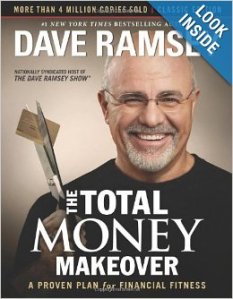
If you aren’t where you want to be financially and don’t have a clear path to getting there the book suggestion below can help.

51g2DdD31VL._SX258_PJlook-inside-v2,TopRight,1,0_SH20_BO1,204,203,200_

In closing, I wish you the best in shortening the distance to your financial freedom.