Category Archives: Financial Success

Hidden Benefits of DIY

What is DIY? Do it yourself!

We recently took on the project of replacing the carpeting in our living room with laminate flooring (something I had never done before). Yes, the simple and quick option would have been to pay someone else do it for us. However, with a little time investment there are SO many benefits of DIY!

The primary “hidden” benefits relate to having the kids involved and/or observing the work-in-progress. As any DIY’er knows, as soon as you start a project MANY interrelated projects pop-up.

You tear up the carpet and backing, then have to dispose of it. The floor may need leveling. You decide to refinish all the woodwork. You realize the electrical sockets, switches and plates as well as the ceiling lights are old/dingy and the color doesn’t match the newly finished woodwork and flooring. So, you replace them. You feel cold air coming through the gaps in the wall which were hidden by the carpet (geez, I think a small rodent could get through there!), so you caulk. And, finally, the installation of the floor and baseboard trim.

The entire process demonstrates to the kids self-sufficiency (you can do “just about” ANYTHING yourself). At the beginning of the project one of the kids asked “Are we going to get paid for this?” Before I could answer, my wife responds with “YEAH, FREE RENT!” What a team 🙂

Then there is the discomfort. “Geez Dad, there is no place to relax.” A clear incentive to chip in and “get’er done!” If we paid someone else to do it, the kids wouldn’t have the opportunity to actively participate in the process; it would seems mysterious (hmmm, I’m really not sure how all this stuff gets done. I must not be able to do it.). Every once in a while it is good for the kids to see the house all tore up, and then have them participate in putting it back together again!

The more selfish benefits include DIY being a significant, multi-day work-out! Not to mention, saving literally thousands of dollars on the entire process!

Yes, there are times when it may make sense to pay someone else to do it (large scale projects requiring heavy equipment and/or highly specialized skills). But, more often than not, household improvements and repairs fall into the DIY category. You CAN do it!

Free Money? Only For The Disciplined…

After receiving an email notification about some “free money” I had just earned, I felt compelled to write this post.

As outlined on the “Cool Tools” page of this blog…Many credit card companies offer rewards (miles, cash back, points, etc.) on purchases we make. Their major goal: Quite literally, to “trick us” into racking up balances on our credit cards so that we pay hefty interest-related fees. The bank’s profit motive.

We can play their game to OUR advantage – if, and only if, we are highly disciplined.

If you have not yet eradicted debt, or are not a disciplined credit card user you are encouraged to first learn how to eradicate debt, and put this post away for another time.

For those with demonstrated discipline, read on and enjoy the free money.

Our approach is to flow ALL of our purchases (I mean EVERYTHING possible) through our “cash back” credit card. This includes, but is not limited to: groceries, gasoline, cell phone bill, gym membership, heating oil, Netflix, auto insurance, college books, etc. However, there are a few caveats that we will not compromise on:

  1. We will NOT do business with a credit card company that charges an annual fee. There are no-fee cards offering cash back rewards (one is suggested below).
  2. We will NEVER pay interest. That is, we MUST pay the entire balance off each and every month — on time, absolutely no exceptions.
  3. We don’t use the card when there is an additional fee imposed on us, by the merchant we are doing business with.

The overriding principle: We shall NOT pay an added expense for the use of money.

We’ve used the Upromise card for years. The “basic” cash back reward is 1%, higher for certain purchases defined in their agreement. They happen to offer a program which funnels our cash back rewards into a 529 plan (a tax free continuing education investment account with Vanguard). This kills 2 birds with a single stone: A painless way to earn “free money” on purchases we were going to make anyway AND we are investing in our children’s college education.

10495074

Some may ask “What is the point? 1% is so very little.” Certainly, taken alone and only considering the “free money” earned on a monthly basis it isn’t much. Or is it…As demonstrated in prior posts, when we ONLY look at the individual / monthly occurrence of an example (to save or earn) it doesn’t seem like much. We’ll again use the X (value earned, in this case, on a monthly basis) times 12 (months) times 10 (years) formula to see how we are doing with this example.

Let’s say that the typical monthly household expenses we channel through our credit card averages $2,000. The cash back reward is $20. Running this through our formula we earn $2,400 over 10 years. For some this number is on the conservative side and it doesn’t even consider other (non-monthly) expenses that could flow through the card (clothing, auto maintenance and repair, the extraction of wisdom teeth, etc.). And, we need not stop here: what about business expenses?

The point (made in several posts) is that, we can take many “seemingly” small steps to earn (raise the bridge) or save on costs (lower the water) towards our financial freedom. Take any one of these examples by themselves, considering only a single (monthly) occurrence, and they may not “seem” like much. Take them all in their entirety, considering the 10-year timeframe and now we are creating momentum!

Would you leave $2,400 “on the table?” I wouldn’t.

As a reminder, for those lacking the discipline to bring their credit card balance to zero every month: “Please don’t try this at home!” For those with discipline: enjoy some free money!

Good Debt vs. Bad Debt?

Is there good vs. bad debt?

Opinions vary. Some will disagree with mine, which is: there is “reasonable” debt and there is bad debt, but there is no such thing as “good” debt. By default, debt means we are “paying” for the use of someone else’s money and we are (for all intents and purposes) their slave until we repay that debt.

Want a 100% guaranteed return? Avoid paying (interest) for the use of money.

In my twenties, during the preparation of a budget, someone older than I once counseled me by saying: “You’ll always have a car payment.” While I had no basis to dispute that guidance then, I can now say: “No, No, No.” We can “choose” to have a car payment, but having a car payment is NOT a “requirement.” In fact, by having a car loan we are artificially (and quite significantly) inflating the cost of the car!

Let’s start with bad debt. I’d consider this to be the continued use of credit cards when we aren’t paying off the balance EVERY SINGLE month, especially for expenditures we receive virtually no long term value from. In the case of my (single) credit card, we’d end up paying an extra 13.24% per year on any outstanding balance. Let’s take a simple example. We “think” we need a new 55″ flatscreen TV (I mean, everyone has one). But, we don’t have the cash on hand to pay for it. It is presently on sale at Best Buy for $699.99. We add this purchase to an existing credit card balance. By doing so we will be paying an extra $92.68 for that TV in just the “first year” that we don’t pay off the credit card balance. We thought we got a deal / savings because the original price of the TV was actually $729.99. This just isn’t the case when we finance our purchases…

One principle to seriously consider is: If we cannot pay cash (or pay the credit card balance off at the end of the month) we simply cannot afford it.

Reasonable debt would be debt that is temporary and serves as an investment in our future. Examples include: a college loan, home mortgage or a loan to launch/expand a business. Why do I consider these “reasonable” vs. good debt? Because debt costs financially (hear that sucking sound?) and psychologically (if I don’t make that payment they can take my car, home, etc.).

This doesn’t mean we should never acquire debt (for reasonable purposes). And, if we do it makes good sense to eradicate debt as soon as reasonably possible.

Why? There are 2 approaches to achieving financial freedom: raise the bridge (increase income) and/or lower the water (decrease expenses). Debt service (interest) is an added cost on items previously purchased or experiences previously enjoyed. By reducing / eliminating that added expense we are more rapidly shortening the distance to our financial independence.

An article was published recently on Yahoo! Finance titled “The Wealthy Poor.” This outlines the downfall of spending everything we earn (and more). In summary, it is not how much we make (and spend) that defines financial freedom and independence. It is how much we keep!

“The definition of insanity is doing the same thing over and over again, expecting a different result.” ~ Albert Einstein

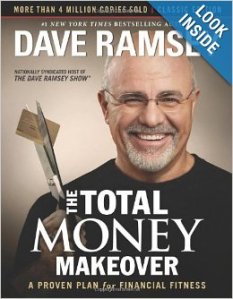
If you aren’t where you want to be financially and don’t have a clear path to getting there the book suggestion below can help.

51g2DdD31VL._SX258_PJlook-inside-v2,TopRight,1,0_SH20_BO1,204,203,200_

In closing, I wish you the best in shortening the distance to your financial freedom.